Knowledge Vault
The Knowledge Vault is MindFront’s memory of your organization — a notebook of how the business actually runs, written one sentence at a time and growing as MindFront works.
It is not a system of record for operational data: CRM records live in your CRM, emails in your inbox, project state in your project tool. The vault holds the norms — policies, preferences, the way things are done, the mistakes not to repeat — that aren’t captured anywhere else.
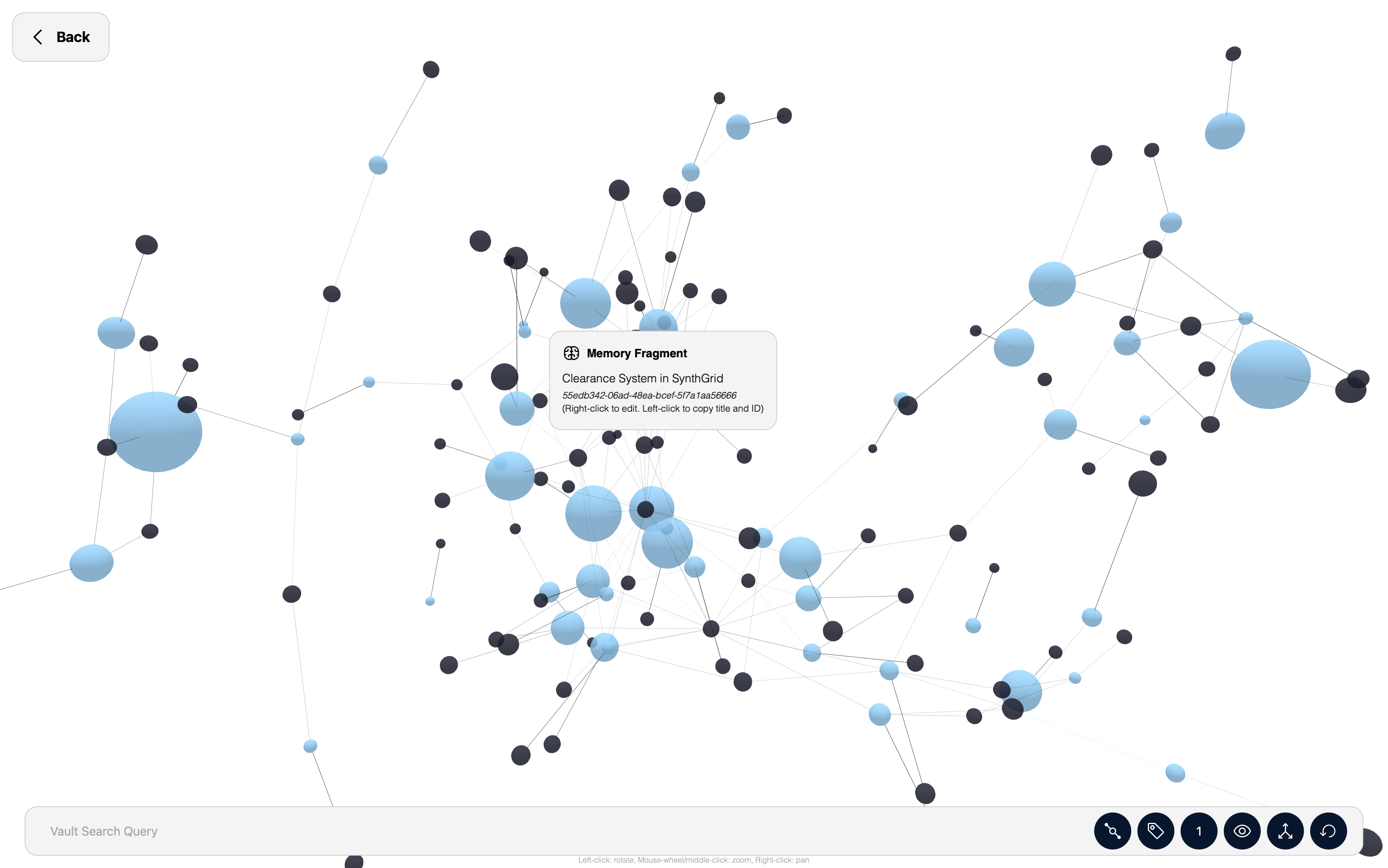
What Gets Stored
Each entry is a single English sentence of organizational norm, policy, or tacit knowledge — written as a direct quote with attribution where possible, never an LLM paraphrase. Examples:
“We only sell B2B — decline B2C leads.”
“Jones (CEO): sign customer emails ‘Good day and thank you for your business.’”
“Invoices over $5,000 need human approval before payment.”
Each entry carries a validity window (so you can answer “what was our policy on date X” even after a rule changes), a confidence value, and a record of where it came from — who said it, when, and in what conversation or task.
How MindFront Uses the Vault
When MindFront takes on a task, the entries relevant to that task surface automatically as context. Two passes run on every search: the relevant memories (what bears on this situation) and the pitfalls (warning-shaped memories — what to avoid here, mistakes the organization has already made). MindFront can also search the vault directly when working on a question:
- Search for what the organization knows (“What do we know about Project X?”)
- Record a new memory (“Remember that our payment terms are net-30”)
- Show, edit, or end-date existing memories as policies change
Memories accumulate from several sources: things people tell MindFront directly, observations MindFront makes from conversations and task outcomes, and curation passes where MindFront reflects over accumulated context.
Access Boundaries
Memories carry the same team-based access tags as everything else in MindFront. General operating knowledge — policies, preferences, the way things are done — is recorded org-wide by default, so the whole organization benefits from what any one part of it learns. Memories MindFront judges personal or sensitive instead keep the scope of the conversation or job they came from: one learned in a Finance-team conversation stays with Finance; one from a personal chat stays with that user.
MindFront is instructed to keep sensitive content — memories about pay, compensation, HR matters, customer-specific commercial terms, legal posture, or security incidents — in the scope it was raised in rather than recording it org-wide.
Where It Lives
The vault is stored on your MindFront server, encrypted at rest, in a storage engine built in-house. The database never leaves the appliance and is never synced to MindFront. Entries surface only as working context sent to your configured LLM provider when relevant to a task — or to no outside party at all, in an offline deployment.